
Play Well with SEL
The problem
Bullying is prevalent in schools and Sub-Saharan Africa is no exception (Aboagye et al, 2021; UNESCO, 2019). This is aggravated in conflict-affected communities; research strongly associates exposure to violence with aggressive behaviors in children (Kim et al, 2019). Alongside teacher violence, bullying is a key cause of school dropout in DRC (Ngamaba et al, 2021). Through observations, we identified that breaktime is a high-risk period of the school day. Unstructured, unsupervised breaks lead to peer violence, accidents, and bullying due to limited supervision and free play on uneven, or even unsafe infrastructure. Many children are excluded or harmed, and teachers often struggle to supervise and maintain order, and can resort to harsh scolding when children need to return to their classes at the end of breaktime.
Violence against children can result in injuries, lifelong health repercussions, as well as adverse impacts on cognitive development, leading to academic underachievement (Moyo et al, 2025). Ngamaba et al (2021) and BRICE project (2022) research shows that rather than conflict-affected schools providing a safe haven for children who are already exposed to violence outside of school, violence continues within school, causing harm to children and obstructing learning.
So what are we doing about it?
Play Well with SEL replaces high-risk, unstructured play at breaktimes with teacher-led, structured games that target social and emotional skills, including cooperation, empathy, self-regulation and conflict resolution. It builds on research on the developmental benefits of structured play for building social and emotional skills in younger children (Loukatari, 2019; Silver & Zinsser, 2020; Tuncdemir, 2025), as some children in the DRC have not had the chance to access structured play activities before school, and because schools have the potential to be protective environments that enable friendship, play and self-expression (Masten et al, 2013).
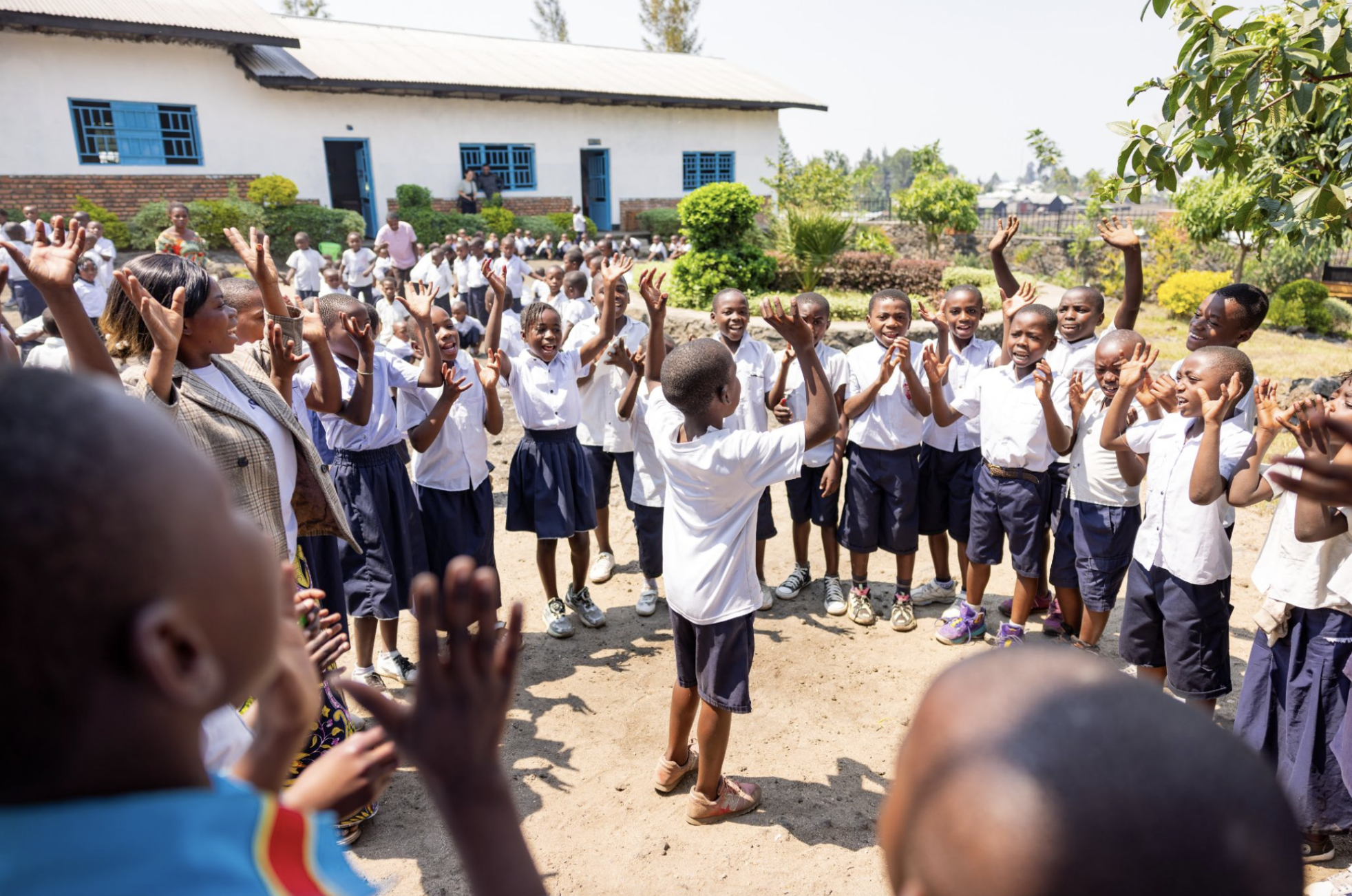
Practice in a nutshell: Whilst strong routines and positive student-teacher relationships help create a safe environment, supervised and structured play extends that protective environment to breaktimes. Teachers lead and supervise whole-class play during breaks, ensuring that A) all children are included, B) all children are safe and C) children learn social and emotional skills through the games they play. This practice reinforces positive student-teacher relationships and creates a way for children to play safely in schools with uneven grounds, or without walls.
2 simple, practical tools support implementation:
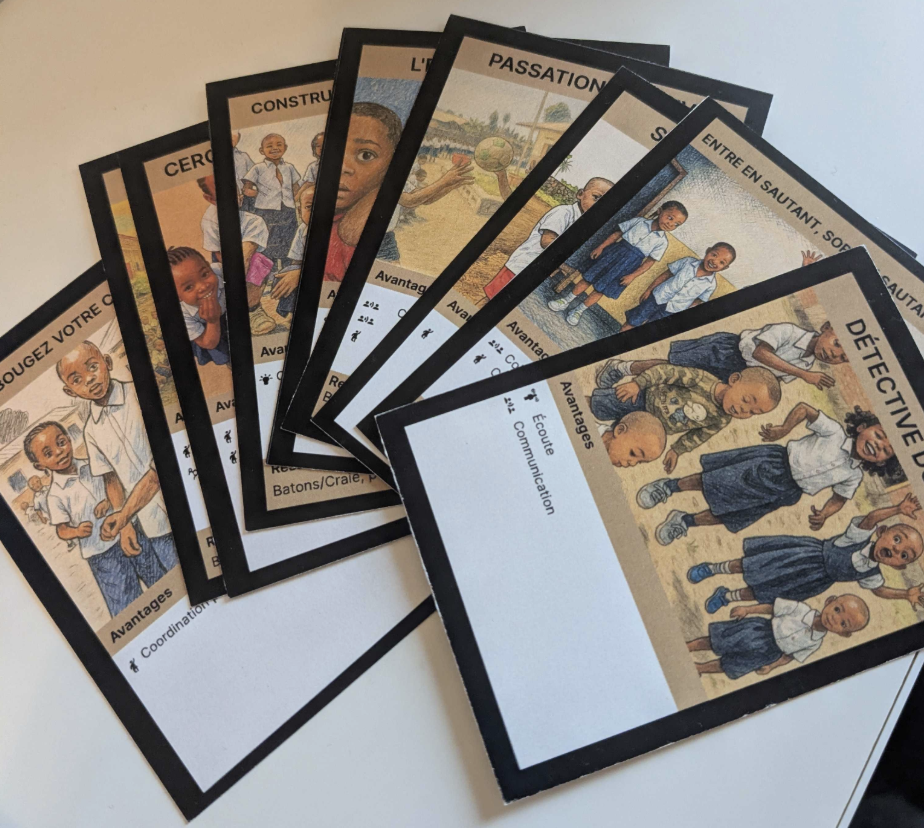
Pocket-sized game cards with the game’s name, instructions, benefits, timing and age groups for teachers.
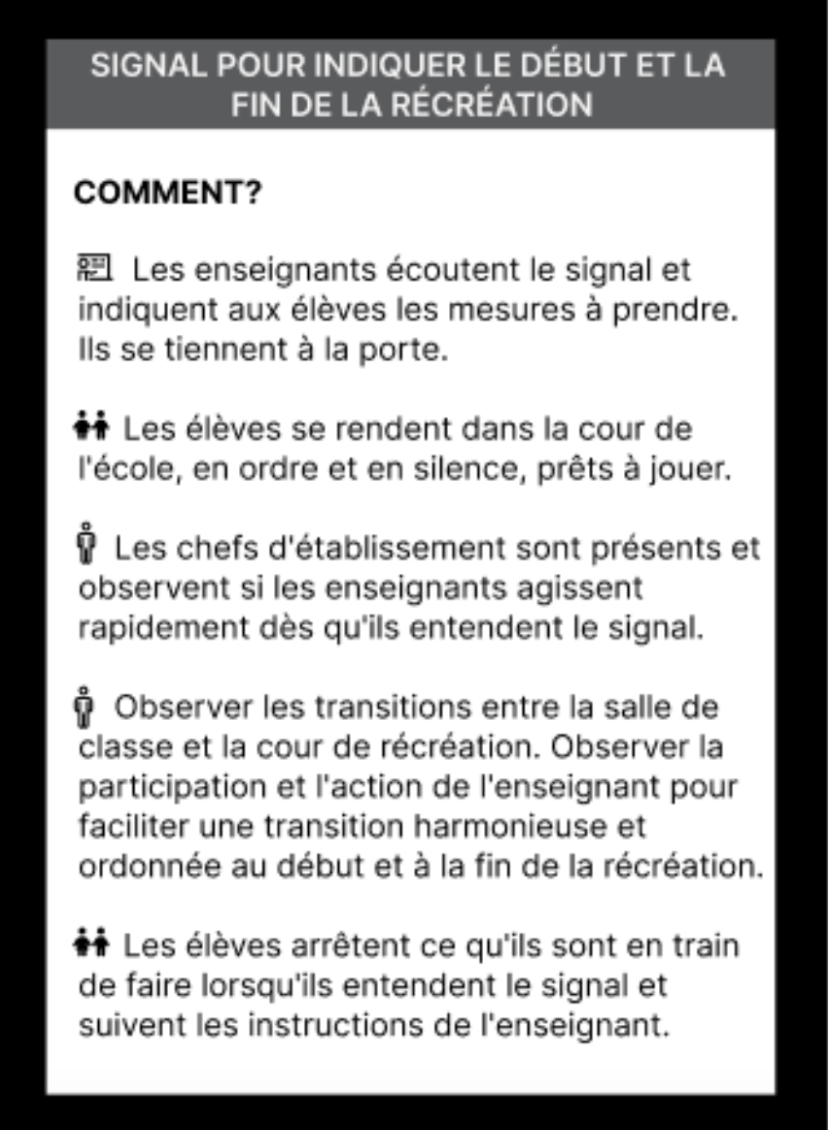
Checklists for school leaders to monitor implementation quality.
99% children say they always like playing games with their teacher during breaktime, and 93% teachers say they like using structured play cards (Justice Rising Stakeholder Survey, November 2025).
“We really love these cards because these tools facilitate discipline for students and for teachers; they really do create an environment that is truly conducive to learning.”
- Headteacher of Johnson Primary School, 2024.
The bigger picture
Play Well with SEL is the tool that supports supervised and structured play: 1 of 18 practices that make up Justice Rising’s quality schooling framework - SMoLL Steps. It sits within the Safety domain alongside: Strong Routines, Positive Student-Teacher Relationships and Emergency Action Plans. You can read more about SMoLL Steps here.